Videonystagmography, or VNG, is a non-invasive assessment that examines how your eyes and balance system respond to movement. It can help identify patterns related to dizziness, vertigo, unsteadiness, and possible inner-ear balance concerns.
Videonystagmography, commonly called VNG, is a series of tests used to evaluate how your eyes, inner ears, and brain work together to support balance.
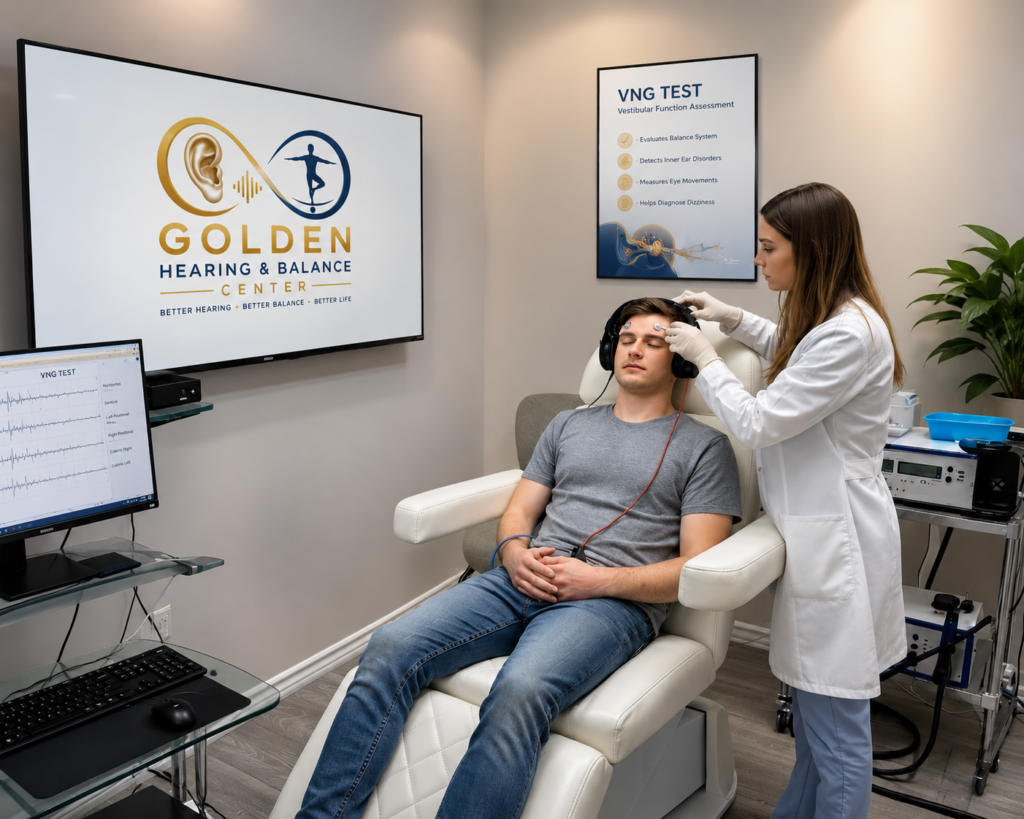
During the assessment, you wear specialized goggles equipped with infrared cameras. These cameras record involuntary eye movements while you follow visual targets, change positions, and complete different balance-related activities.
Because eye movement and balance are closely connected, the results can provide useful information about whether your symptoms may be related to the vestibular system in the inner ear or another part of the balance pathway.
VNG measures physical eye responses rather than relying only on how dizziness feels.
VNG May Be Recommended For:
Dizziness or vertigo
Balance problems or unsteadiness
Motion sensitivity or nausea
Unexplained falls
Symptoms triggered by head move
Possible inner-ear balance concerns
A comprehensive assessment helps determine whether VNG is appropriate for your symptoms.
VNG TEST COMPONENTS
How Does VNG Help Diagnose Dizziness?
VNG testing examines different parts of the balance system by recording how your eyes respond during a series of controlled activities.
Oculomotor Testing
Measures how accurately and smoothly your eyes follow lights and moving targets. This helps assess visual tracking and eye-movement control.
Positional Testing
Records eye movements while your head and body are placed in different positions. This may help identify symptoms related to positional changes.
Caloric Testing
Uses warm and cool air to stimulate each ear individually. The resulting eye movements help compare how each side of the vestibular system responds.
Together, these results help your clinician understand which part of the balance system may require further attention.
What Happens During Your VNG Assessment?
1
Health & Symptom Review
We begin by discussing your symptoms, medical history, and situations that may trigger your dizziness.
2
VNG Goggles
You will wear specialized goggles with infrared cameras that record your eye movements during the assessment
3
Guided Test Activities
You will follow visual targets, change head and body positions, and complete controlled balance-related activities.
4
Results & Recommendations
our results are reviewed alongside your symptoms and clinical findings to help determine the most appropriate next steps.
NEXT STEPS AFTER VNG
How Golden Hearing Uses Your VNG Results
VNG testing is an assessment, not a treatment. Your results help us better understand your balance system and determine the most appropriate next steps for your care.
Positional Vertigo Care
Canalith repositioning treatment may help relieve BPPV and positional dizziness.
Vestibular Rehabilitation
Personalized exercises may help improve balance, visual stability, movement tolerance, and confidence.
Additional Testing
Further vestibular, hearing, or diagnostic testing may be recommended to better understand your symptoms & care plan.
Medical Referral
We may recommend coordination with the appropriate healthcare professional when another condition is involved.