If you are experiencing vertigo after flu, you are not alone. Many people recover from influenza only to notice dizziness, a spinning sensation, or problems with balance that continue for days or even weeks. Although these symptoms can be alarming, they are often related to temporary inflammation affecting the inner ear or the vestibular (balance) system.
At Golden Hearing & Balance Center in Vaughan, we regularly assess patients with dizziness and balance disorders. Understanding the cause of vertigo after flu is the first step toward effective treatment and recovery.
Can the Flu Cause Vertigo?
Yes. Influenza is a viral infection that primarily affects the respiratory system, but in some individuals, it can also affect the inner ear or the vestibular nerve, which controls balance.
When the balance system becomes inflamed, the brain receives incorrect signals about your body’s position and movement. This can result in vertigo—a false sensation that you or your surroundings are spinning.
While not everyone who gets the flu develops vertigo, viral infections are one of the most common causes of sudden vestibular disorders.
What Is Vertigo?
Vertigo is different from general dizziness or feeling lightheaded.
People with vertigo often describe:
- A spinning or rotating sensation
- Feeling like the room is moving
- Loss of balance
- Difficulty walking straight
- Nausea or vomiting
- Motion sensitivity
- Feeling worse when turning the head
These symptoms can range from mild to severe and may interfere with daily activities.
Why Does Vertigo Occur After the Flu?
Several conditions may develop during or after influenza.
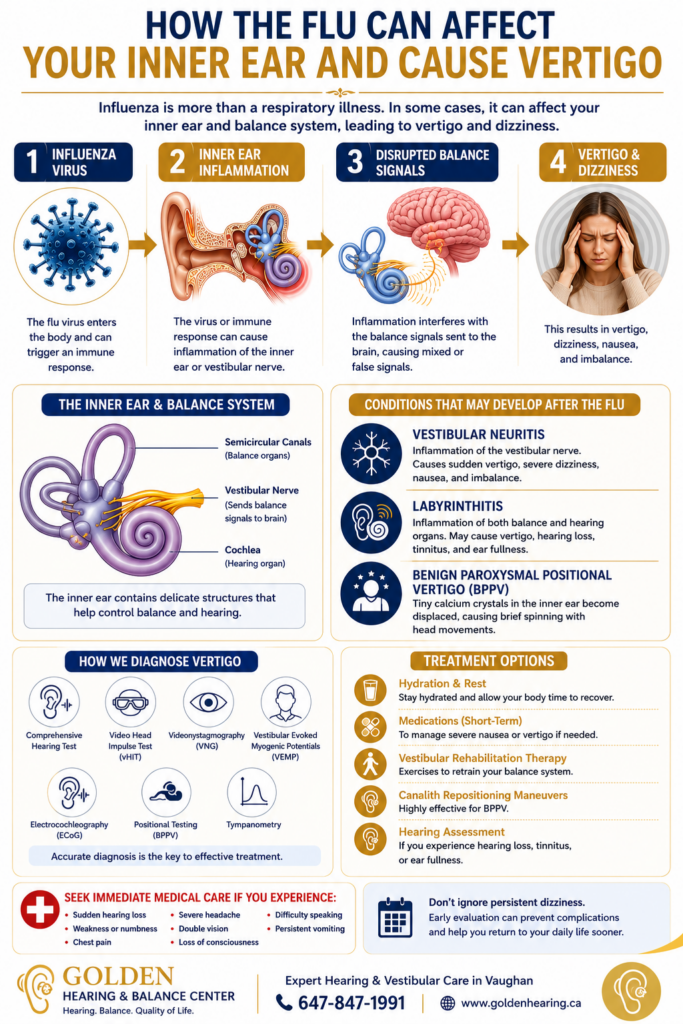
1. Vestibular Neuritis
Vestibular neuritis is inflammation of the vestibular nerve, usually caused by a viral infection.
Symptoms include:
- Sudden severe vertigo
- Difficulty walking
- Nausea
- Vomiting
- Normal hearing in most cases
The intense spinning often improves within several days, but imbalance may persist for weeks.
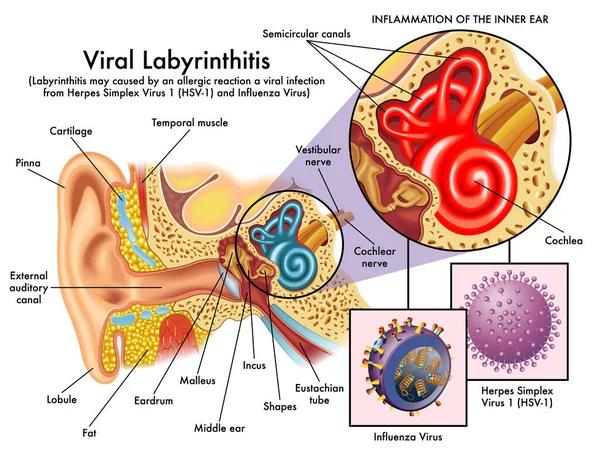
2. Viral Labyrinthitis
Labyrinthitis affects both the balance organs and the hearing organs inside the inner ear.
Symptoms may include:
- Vertigo
- Hearing loss
- Ringing in the ears (tinnitus)
- Ear fullness
- Balance difficulties
Unlike vestibular neuritis, labyrinthitis may affect hearing and should be assessed promptly.
3. Benign Paroxysmal Positional Vertigo (BPPV)
In some people, a viral illness may trigger BPPV, where tiny calcium crystals become displaced inside the inner ear.
Common symptoms include:
- Brief spinning when turning in bed
- Vertigo when looking up
- Dizziness when bending over
- Symptoms lasting less than one minute
Fortunately, BPPV is highly treatable using canalith repositioning maneuvers performed by trained clinicians.
4. Dehydration and Low Blood Pressure
Influenza can also cause:
- Fever
- Reduced fluid intake
- Dehydration
- Low blood pressure
These conditions can produce dizziness or lightheadedness, although they usually do not cause true vertigo.
Symptoms of Vertigo After Flu
People experiencing vertigo after flu may notice:
- Spinning sensation
- Feeling off balance
- Difficulty walking
- Motion sensitivity
- Nausea
- Vomiting
- Blurred vision during movement
- Ear fullness
- Tinnitus
- Hearing loss
- Increased risk of falls
If hearing changes accompany dizziness, an inner ear disorder is more likely and should be evaluated promptly.
How Long Does Vertigo After Flu Last?
Recovery depends on the underlying cause.
Typical recovery times include:
- Mild viral dizziness: a few days
- Vestibular neuritis: several weeks
- Labyrinthitis: weeks to months
- BPPV: often improves immediately after proper treatment
Most people gradually improve, but persistent symptoms should not be ignored.
How Is Vertigo After Flu Diagnosed?
An audiologist specializing in vestibular disorders can determine whether your dizziness is caused by an inner ear condition.
A comprehensive balance assessment may include:
- Complete hearing evaluation
- Video Head Impulse Test (vHIT)
- Videonystagmography (VNG)
- Vestibular Evoked Myogenic Potentials (VEMP)
- Electrocochleography (ECoG)
- Positional testing for BPPV
- Tympanometry
These tests help identify the exact cause of your symptoms and guide appropriate treatment.
Treatment for Vertigo After Flu
Treatment depends on the diagnosis.
Your healthcare provider may recommend:
- Adequate hydration
- Rest during the acute illness
- Short-term medications for severe nausea or vertigo
- Vestibular rehabilitation therapy
- Canalith repositioning maneuvers for BPPV
- Hearing assessment if hearing changes occur
Remaining inactive for too long is generally not recommended once the acute phase has passed. Gentle movement often helps the brain adapt more quickly to changes in the vestibular system.
When Should You See an Audiologist?
You should schedule a professional assessment if:
- Vertigo lasts more than a few days
- You experience repeated episodes
- Your balance continues to worsen
- You notice hearing loss
- You develop tinnitus
- You have difficulty walking safely
- Your symptoms interfere with work or daily activities
Early diagnosis can shorten recovery time and reduce the risk of falls.
When Should You Seek Emergency Medical Care?
Although most cases of vertigo after flu are related to the inner ear, some symptoms require immediate medical attention.
Seek emergency care if you experience:
- Sudden weakness or numbness
- Difficulty speaking
- Double vision
- Severe headache
- Chest pain
- Loss of consciousness
- Persistent vomiting
- Sudden hearing loss
- Difficulty walking that develops suddenly
These symptoms could indicate a more serious medical condition.
Can Vertigo After Flu Be Prevented?
Although not every case can be prevented, you can lower your risk by:
- Drinking plenty of fluids
- Getting adequate rest
- Managing fever appropriately
- Returning to normal activity gradually
- Seeking evaluation if dizziness persists after recovery
Why Choose Golden Hearing & Balance Center?
At Golden Hearing & Balance Center, we provide comprehensive hearing and vestibular evaluations using advanced diagnostic technology to identify the cause of dizziness and balance problems.
If you are experiencing vertigo after flu, our audiologist can determine whether your symptoms are related to conditions such as vestibular neuritis, labyrinthitis, BPPV, or another vestibular disorder, and recommend the most appropriate treatment plan.
Frequently Asked Questions
Can the flu affect the inner ear?
Yes. Influenza and other viral infections may cause inflammation of the vestibular nerve or the inner ear, resulting in vertigo, imbalance, and sometimes hearing loss.
Is vertigo after flu common?
It is not one of the most common flu symptoms, but viral infections are a well-recognized cause of vestibular disorders.
Can vertigo after flu go away on its own?
Many people recover without permanent problems, but persistent or severe symptoms should be evaluated by a healthcare professional.
Can the flu cause permanent balance problems?
Most people recover completely. However, some individuals require vestibular rehabilitation therapy or treatment for conditions such as BPPV or labyrinthitis.
Final Thoughts
Experiencing vertigo after flu can be unsettling, but in many cases it is caused by a treatable problem affecting the inner ear or vestibular system. The key is obtaining an accurate diagnosis rather than assuming the dizziness will disappear on its own.
If your vertigo continues after recovering from the flu, or if you notice hearing changes, tinnitus, or ongoing balance difficulties, a comprehensive vestibular assessment can help identify the cause and guide effective treatment.
At Golden Hearing & Balance Center in Vaughan, we are dedicated to helping patients regain their balance, confidence, and quality of life through advanced hearing and vestibular care.