Why do my hearing aids whistle? Hearing aid whistling, also known as hearing aid feedback, is a common issue experienced by many hearing aid users. The good news is that most cases are caused by simple problems such as earwax buildup, an improper fit, or worn hearing aid components. Understanding the cause can help you restore clear, comfortable hearing.
The good news is that most causes of hearing aid whistling can be identified and corrected with the help of an audiologist.
Why Do My Hearing Aids Whistle? Common Causes
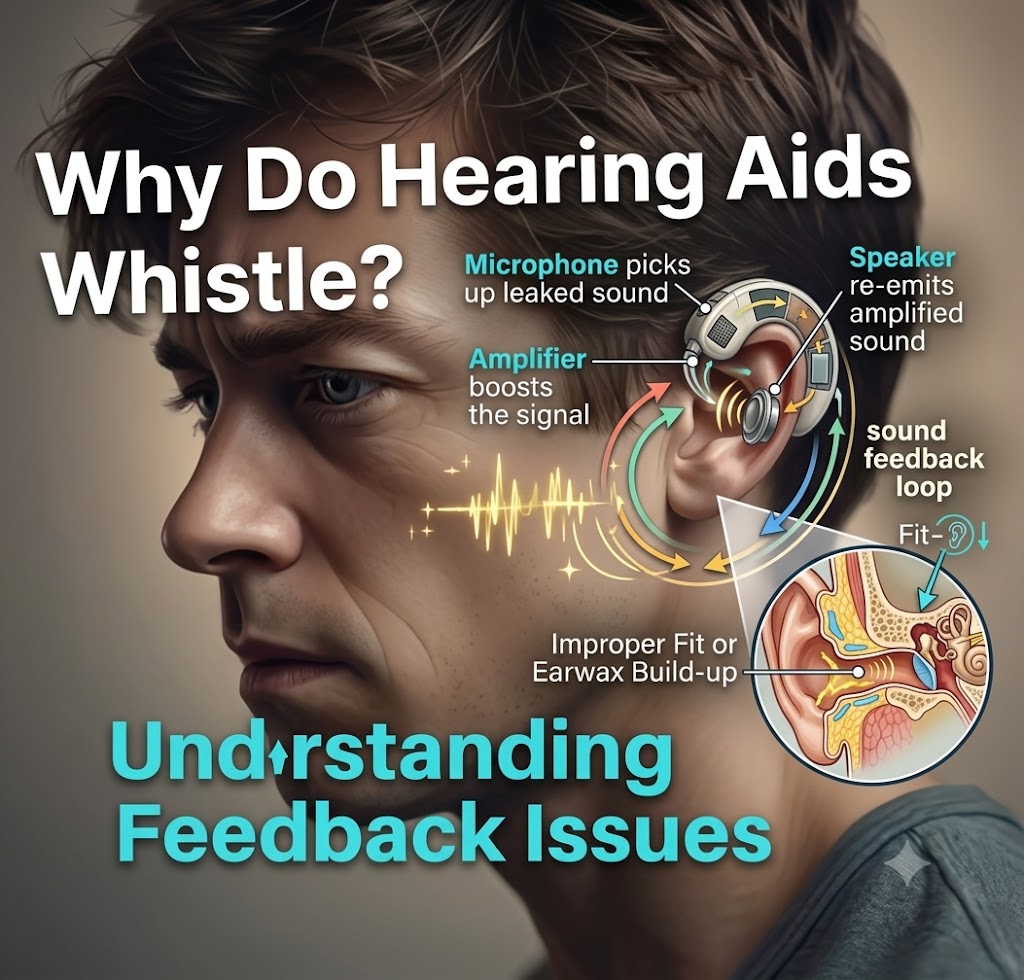
Hearing aid whistling occurs when amplified sound escapes from your ear and is picked up again by the hearing aid’s microphone. This creates a feedback loop, resulting in the familiar high-pitched whistle.
Several factors can cause this to happen.
1. Poor Hearing Aid Fit
One of the most common reasons for hearing aid feedback is an improper fit. If the hearing aid or earmold does not seal the ear canal properly, amplified sound can leak out and re-enter the microphone.
This may happen if:
- The hearing aid is not inserted correctly.
- The earmold has become loose over time.
- Weight loss or natural changes in the ear canal have affected the fit.
- The device is worn incorrectly.
A properly fitted hearing aid significantly reduces the chance of feedback.
2. Earwax Buildup
Excessive earwax is another common cause of hearing aid whistling. Instead of allowing sound to travel naturally into the ear canal, earwax reflects amplified sound back toward the hearing aid microphone.
Signs that earwax may be contributing include:
- Sudden onset of whistling
- Reduced hearing despite wearing hearing aids
- A feeling of fullness in the ear
- Muffled sound quality
Regular ear examinations and professional earwax removal can often resolve this issue.
3. Increased Volume
Turning the hearing aid volume up too high may cause feedback, especially if the hearing aid is not fitting securely.
Modern hearing aids include sophisticated feedback management systems, but excessive amplification can still overwhelm these features.
If you frequently increase the volume, it may indicate that your hearing has changed and your hearing aids need reprogramming.
4. Damaged or Worn Earmolds
Over time, earmolds, domes, and tubing can wear out, harden, crack, or lose their shape. These changes create tiny gaps where sound escapes.
Replacing worn parts is a simple and effective solution that can improve both comfort and sound quality.
5. Changes in Your Hearing
Your hearing may gradually change over time. If your current hearing aid settings no longer match your hearing loss, you may experience increased feedback or reduced speech clarity.
Regular hearing evaluations help ensure your hearing aids remain properly programmed for your needs.
6. Objects Close to the Hearing Aid
Sometimes feedback occurs only when something comes close to the hearing aid, such as:
- Talking on the telephone
- Wearing a hat or hood
- Hugging someone
- Covering your ears with your hands
- Wearing a face mask with thick straps
These situations can reflect amplified sound back into the microphone and temporarily cause whistling.
How Can You Stop Hearing Aid Whistling?
When I know why do my hearing aids whistle better, the solution may be simple.
You can:
- Make sure your hearing aids are inserted correctly.
- Clean your hearing aids regularly.
- Replace worn domes or tubing as recommended.
- Avoid increasing the volume unnecessarily.
- Schedule regular hearing aid maintenance.
- Have your ears checked for earwax buildup.
- Visit your audiologist for reprogramming if your hearing has changed.
Avoid trying to modify the hearing aid yourself, as this may damage the device or affect its performance.
When Should You See an Audiologist?
If you’re repeatedly asking yourself, “Why do my hearing aids whistle?”, and the problem continues despite cleaning and proper insertion, it’s time to have your hearing aids professionally evaluated. You should schedule an appointment if:
- Your hearing aids whistle frequently.
- The feedback started suddenly.
- Cleaning the hearing aids does not solve the problem.
- You notice reduced hearing or muffled sound.
- Your hearing aids are several years old and have not been adjusted recently.
- You suspect earwax buildup or an ear infection.
An audiologist can determine whether the issue is related to the hearing aid, your hearing, or an underlying ear condition.
Can New Hearing Aids Prevent Feedback?
Yes. Modern digital hearing aids include advanced feedback cancellation technology that continuously monitors sound and minimizes whistling before it becomes noticeable.
However, even the most advanced hearing aids still require:
- Proper fitting
- Professional programming
- Routine maintenance
- Periodic hearing evaluations
Technology works best when combined with expert audiological care.
The Bottom Line
Why do my hearing aids whistle? In most cases, the cause is hearing aid feedback resulting from earwax, an improper fit, worn components, or changes in your hearing. Fortunately, these problems can usually be corrected without replacing your hearing aids.
Rather than living with annoying feedback, have your hearing aids and ears evaluated by an audiologist. A small adjustment can often make a significant difference in your hearing comfort and speech understanding.
At Golden Hearing & Balance Center, we provide comprehensive hearing evaluations, hearing aid adjustments, professional cleaning, earwax removal, and personalized hearing aid fittings to help you get the best possible performance from your devices. If your hearing aids are whistling, we’re here to help you hear comfortably and confidently again.
Frequently Asked Questions
Why do my hearing aids whistle when I hug someone?
When you hug someone or place your hand near your ear, sound can reflect back into the hearing aid microphone, causing temporary feedback. This is usually normal.
Can earwax make hearing aids whistle?
Yes. Earwax can block the ear canal and reflect amplified sound back toward the microphone, creating feedback. Professional earwax removal often resolves the problem.
Is hearing aid whistling a sign they are broken?
Not necessarily. Most cases of whistling are caused by fit, earwax, or programming issues rather than a faulty device. An audiologist can identify the exact cause.
Should I turn down the volume if my hearing aids whistle?
Reducing the volume may temporarily decrease feedback, but persistent whistling should be assessed by an audiologist to address the underlying cause.
Why do my hearing aids whistle all of a sudden?
If you’re wondering why do my hearing aids whistle suddenly, common causes include earwax buildup, a loose earmold, worn tubing, changes in your hearing, or accidental movement of the hearing aid. An audiologist can identify the exact cause and recommend the appropriate solution.