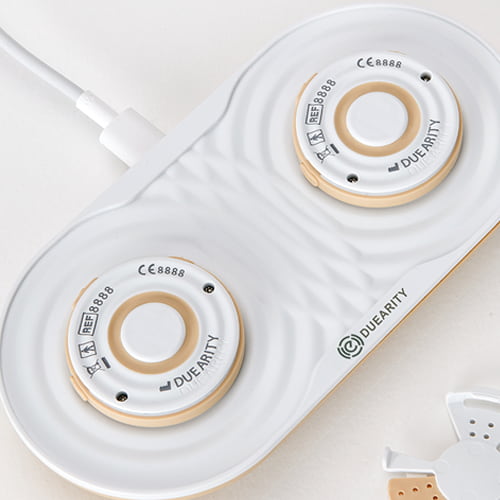
If you haven’t looked at modern hearing hardware recently, you might still picture the bulky, beige plastic devices of the past. The hearing aid technology evolution over the last two decades is nothing short of incredible. What was once a basic piece of wearable audio equipment has transformed completely.
Understanding this hearing aid technology evolution helps explain why modern devices look, feel, and sound entirely different than the instruments of the early 2000s. Hearing aids have officially evolved from simple, linear sound amplifiers into highly sophisticated, wearable mini-computers.
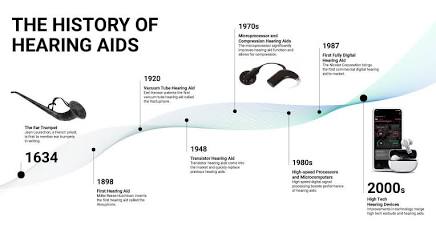
The Long Evolution of Hearing Technology. Source: Hearing Health Foundation
Early Digital Processing & Basic Compression
2006 – 2011
While the industry had mostly transitioned from old analog circuits to digital processing by this era, the programming was still quite basic in this early stage of the hearing aid technology evolution. Devices relied on early multi-channel compression to make soft sounds audible and loud sounds comfortable. However, conducting a comprehensive Hearing Aid technology evaluation during this phase often highlighted that separating speech from heavy background noise remained a major challenge for users, especially in busy environments like restaurants. Devices during this era were also heavily reliant on disposable zinc-air batteries, requiring frequent, tedious battery changes and constant ongoing costs.
The Wireless & Connectivity Revolution
2012 – 2017
This era introduced true wireless synchronization between the left and right instruments, marking a massive leap forward in the hearing aid technology evolution. For the first time, a pair of hearing aids could communicate with each other as a single, unified system to automatically balance volume levels and better locate sounds in a room. We also witnessed the arrival of Made-for-iPhone (MFi) 2.4 GHz Bluetooth streaming. This milestone changed how clinicians approached a Hearing Aid technology evaluation, as devices could now stream phone calls, videos, and music directly to a user’s ears for the very first time without needing a bulky, neck-worn relay device.
Lithium-Ion Rechargeability & Universal Streaming
2018 – 2022
Disposable batteries rapidly began taking a backseat to reliable, built-in lithium-ion rechargeable power cells, mimicking the convenient charging habits of modern smartphones. Universal Bluetooth protocol advancements meant direct, hands-free streaming expanded seamlessly to Android devices as well. Sound processing algorithms grew significantly smarter, automatically identifying environmental acoustic profiles and adjusting settings without requiring the wearer to press any manual buttons or toggle toggles.
The Modern Era: Deep Neural Networks & Onboard AI
2023 – Present
Today, we are witnessing the peak of this hearing aid technology evolution. Premium hearing aids utilize advanced Artificial Intelligence (AI) and onboard Deep Neural Networks (DNN). Instead of just guessing how to cut background noise by suppressing entire frequency bands, these advanced systems are trained on millions of real-world sound environments. They can instantly isolate, clean, and prioritize human speech in real-time, drastically reducing the listening effort required by the human brain.
How Modern Sound Processing Protects Your Brain
As we examine the recent history of hearing instruments, it becomes clear that modern devices do not just make the world louder. In fact, the most critical part of the hearing aid technology evolution is how these devices interact with your brain.
When you live with untreated hearing loss, your brain has to work incredibly hard just to piece together missing speech sounds. This is known as cognitive overload, and it leads directly to mental exhaustion, social withdrawal, and headaches at the end of a long day.
Modern premium devices solve this by handling the heavy lifting before the sound ever reaches your eardrum. By instantly filtering out the clanging of silverware or the roar of traffic, they allow you to follow conversations naturally. They restore true speech clarity, protect your long-term cognitive health, and blend seamlessly into your existing digital life with true hands-free calling and natural, 360-degree spatial sound.
If you or a loved one are still wearing older devices from a previous generation, experiencing the latest stage of this hearing aid technology evolution can create a night-and-day difference for your daily communication, social confidence, and overall quality of life.
Come Experience the Modern Generation of Hearing Care in Woodbridge
If you want to experience firsthand what the latest generation of hearing technology sounds like, we invite you to visit our clinic for a live, personalized demonstration. We can program a modern device to your specific hearing profile so you can hear the difference immediately.
- Website: www.goldenhearing.ca
- Phone: 647-847-1991
- Address: Suite 210, 4600 Highway 7, Woodbridge, ON