Hearing aids and balance have become an important topic in audiology research. When patients ask about hearing aids and balance, growing evidence suggests that treating hearing loss with properly fitted hearing aids may improve balance, reduce the risk of falls, and increase confidence while walking. Although hearing aids do not treat vestibular disorders directly, they can play an important role in helping people remain active, independent, and safe.
The Link Between Hearing loss and Balance
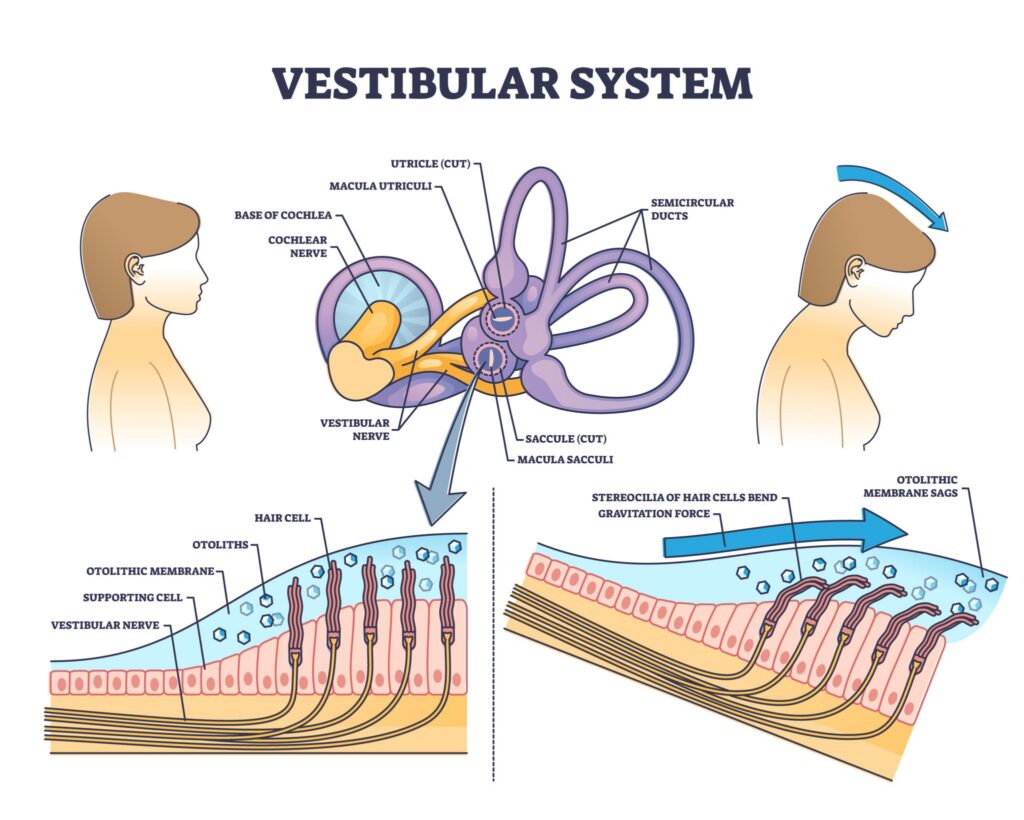
The hearing organ (cochlea) and the balance organ (vestibular system) are located together in the inner ear and share the same nerve pathways to the brain. Although they perform different functions, they work together to help us understand our environment and maintain stability.
When hearing declines, the brain receives less auditory information about the surrounding environment. This reduced awareness can make it more difficult to judge where sounds are coming from, detect approaching hazards, or maintain orientation while walking. As a result, individuals with hearing loss are more likely to experience balance problems and falls.
Research consistently shows that people with hearing loss have a significantly greater risk of falling compared with those who have normal hearing. A large systematic review published in 2025 reported that hearing loss was associated with approximately a 51% increased risk of falls.
Why Does Hearing Loss Affect Balance?
Researchers believe several mechanisms explain this relationship.
1. Reduced Environmental Awareness
Our ears constantly provide important information about our surroundings. Sounds such as footsteps, traffic, voices, running water, alarms, and echoes help the brain understand where we are in space.
When hearing loss reduces these auditory cues, it becomes more difficult to:
- Detect obstacles
- Judge movement around you
- Navigate unfamiliar environments
- Walk confidently in crowded places
Hearing aids restore many of these missing sounds, allowing the brain to better interpret the environment.
2. Increased Cognitive Load
Understanding speech with untreated hearing loss requires significant mental effort.
Instead of automatically processing sounds, the brain must work harder to fill in missing information. This increased “listening effort” leaves fewer mental resources available for other important tasks, including:
- Maintaining posture
- Coordinating movement
- Reacting quickly to changes in terrain
- Preventing falls
Researchers refer to this as cognitive load.
Hearing aids reduce listening effort, allowing the brain to devote more attention to balance and safe mobility.
3. Improved Confidence and Mobility
Many individuals with untreated hearing loss gradually reduce their physical activity because they feel less confident walking outdoors or participating in social activities.
Reduced activity leads to:
- Muscle weakness
- Poor balance
- Reduced endurance
- Greater fall risk
By improving communication and environmental awareness, hearing aids often help people regain confidence, become more active, and maintain better physical health.
What Does the Latest Research Show(Hearing Aids and Balance connection)?
Several recent studies have investigated whether hearing aids improve balance.
Reduced Risk of Falls
Multiple studies have found that adults who wear hearing aids consistently experience fewer falls than individuals with untreated hearing loss.
A 2023 study reported that regular hearing aid users demonstrated better postural stability and lower fall risk than non-users with similar hearing loss.
Better Walking Performance
Research has shown improvements in:
- Walking speed
- Gait stability
- Walking in noisy environments
- Dual-task walking (walking while talking)
These improvements are particularly important because many falls occur while performing more than one task simultaneously.
Improved Balance Confidence with hearing aids
When looking at the connection between hearing aids and balance, even when objective balance measurements show only modest improvements, hearing aid users frequently report:
- Feeling steadier
- Greater confidence outdoors
- Less fear of falling
- Increased participation in social activities
Reduced fear of falling often encourages greater physical activity, which further strengthens balance over time.
hearing aids and balance: Can Hearing Aids Treat Vertigo?
No.
Hearing aids are not a treatment for:
- Benign Paroxysmal Positional Vertigo (BPPV)
- Vestibular neuritis
- Ménière’s disease
- Vestibular migraine
- Persistent Postural-Perceptual Dizziness (PPPD)
These conditions require a comprehensive vestibular assessment and, in many cases, specialized treatment such as Vestibular Rehabilitation Therapy (VRT), repositioning maneuvers, medication, or medical management.
However, if hearing loss is also present, properly fitted hearing aids may improve overall stability and quality of life alongside treatment for the underlying balance disorder.
Who May Benefit Most?
Research suggests hearing aids may be particularly beneficial for individuals who:
- Have age-related hearing loss
- Have experienced one or more falls
- Feel unsteady while walking
- Have difficulty hearing in noisy places
- Avoid activities because of poor hearing
- Have both hearing loss and vestibular disorders
Comprehensive Assessment Is Essential
Balance problems rarely have a single cause.
Poor balance may result from:
- Hearing loss
- Inner ear (vestibular) disorders
- Vision problems
- Peripheral neuropathy
- Arthritis
- Medication side effects
- Cardiovascular disease
- Neurological conditions
Because of this, a complete assessment is the best way to determine the underlying cause.
At Golden Hearing & Balance Center, we provide comprehensive evaluations that may include:
- Comprehensive Hearing Assessment
- Video Head Impulse Test (vHIT)
- Videonystagmography (VNG)
- Vestibular Evoked Myogenic Potentials (VEMP)
- Dix–Hallpike Testing for BPPV
- Vestibular Rehabilitation Therapy (VRT)
- Hearing Aid Evaluation and Fitting
By understanding the connection between hearing aids and balance, we can develop a personalized treatment plan to help improve communication, stability, and confidence.
The Bottom Line
When exploring how hearing aids and balance interact, current research suggests that hearing aids can contribute to better balance and may reduce the risk of falls in people with hearing loss. While they do not treat vestibular disorders directly, they improve environmental awareness, reduce the mental effort required for listening, and encourage people to remain active—all factors that support safer mobility.
If you are looking into how hearing aids and balance can improve your daily stability, addressing hearing loss, or dizziness with an early assessment is important. Identifying and managing hearing loss, together with appropriate balance evaluation and treatment when needed, can help you stay independent and maintain a higher quality of life.
References
- Association of Hearing Loss With Falls: A Systematic Review and Meta-analysis – Reported that hearing loss is associated with approximately a 51% higher risk of falls.
- Johns Hopkins Medicine – Research led by Frank Lin has demonstrated a strong association between hearing loss and increased fall risk.
- American Academy of Audiology – Clinical guidance emphasizes that hearing aids improve communication and environmental awareness but should be combined with appropriate vestibular evaluation when balance disorders are suspected.