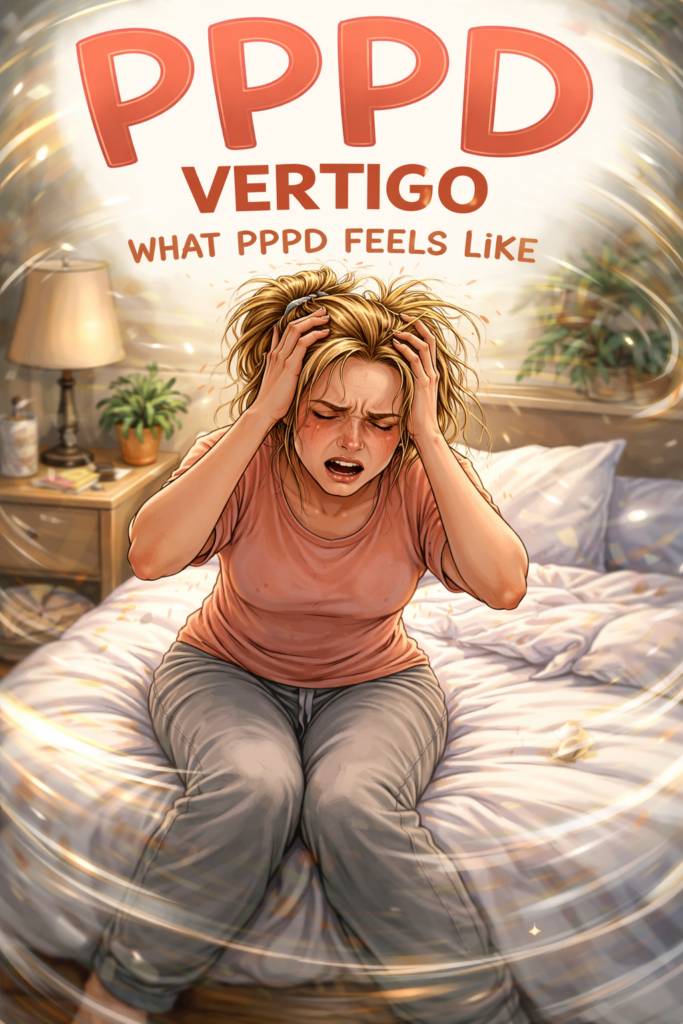
If you are struggling with a persistent, vague sense of unsteadiness that standard medical tests can’t quite seem to pin down, you may be experiencing Persistent Postural-Perceptual Dizziness (PPPD). Far from being “all in your head,” Persistent Postural-Perceptual Dizziness (PPPD) is a recognized, functional neurological disorder that affects the way your brain processes balance signals, causing an estimated 15% to 20% of patients presenting with vestibular symptoms to feel like they are constantly rocking, swaying, or floating.
Have you ever stepped off a cruise ship, a long flight, or a treadmill, only to feel like your body is still moving hours later? For most people, that sensation quickly fades. But for those living with chronic imbalance, that unsettling feeling becomes a daily reality.
From History to Modern Medicine: What is PPPD?
While the formal diagnostic criteria for PPPD were recently established by the Bárány Society, the condition itself is not new. As early as the late 19th century, German physicians documented similar syndromes under terms like Platzschwindel (vertigo in a plaza) and Space-Motion Discomfort. Over the decades, it has been described as Visual Vertigo or Chronic Subjective Dizziness (CSD).
Today, we understand that PPPD is a functional communication glitch between the brain and the body. It typically peaks in a person’s mid-40s and is statistically more common in women, though it can affect anyone at any age.
The 5 Diagnostic Criteria for PPPD
According to the official Bárány Society guidelines, a formal clinical diagnosis of PPPD requires meeting all five of the following criteria:
| Criterion | Clinical Requirement |
| 1. Symptom Profile | Dizziness, unsteadiness, or non-spinning vertigo present on most days for 3 months or more. Symptoms last for hours at a time and may wax and wane. |
| 2. Specific Triggers | Symptoms occur without a direct cause but are severely exacerbated by: • Upright posture (sitting or standing) • Active or passive motion (moving your head or riding in a car) • Complex visual stimuli (crowded places, patterns, or screens) |
| 3. A Clear Precipitant | The disorder is initially triggered by an event that caused a balance disruption, such as an acute vestibular attack (e.g., vertigo, BPPV, or neuritis), a neurological illness, or acute psychological distress. |
| 4. Functional Impact | The symptoms cause significant emotional distress or measurable impairment in daily life, work, and social activities. |
| 5. Exclusionary Rule | The symptoms cannot be better accounted for by another active disease or structural disorder. |
Inside the Pathophysiology: Why is This Happening?
To understand PPPD, it helps to look at how the brain manages spatial orientation. Your brain constantly synthesizes information from three primary systems: your eyes (visual), your inner ear (vestibular), and your muscles/joints (proprioceptive).
When a person experiences an initial dizzy spell (the precipitant), the central nervous system naturally enters a high-alert “safe mode” to protect the body from falling. In a normal recovery, the brain drops this defense mechanism once the trigger resolves.
In PPPD, however, a breakdown in the brain’s natural adaptation process occurs, leading to two distinct issues:
Sensory Mismatch & Visual Dependency
The brain enters a chronic state of maladaptation, struggling to integrate conflicting inputs from your eyes and inner ears. It begins to over-rely on visual information. In visually “busy” environments—like walking through a crowded grocery store aisle or scrolling through a phone—the brain suffers from sensory overload, inducing intense dizziness and motion intolerance.
Central Sensitization
The central nervous system becomes hypersensitive, lowering your vestibular threshold. Recent neuroimaging and rotary chair studies show that individuals with PPPD have a significantly reduced motion-perception threshold. This means your brain registers normal, tiny body sways that a healthy brain would completely ignore, treating them as active threats to your stability.
The Complicated Cycle of Anxiety and Migraines
Clinical data shows a profound, bidirectional link between PPPD and psychological factors. Living with chronic dizziness naturally induces anxiety and depression, which in turn fuels the nervous system’s hypersensitivity. Furthermore, research reveals a 53% prevalence of migraine headaches among individuals with PPPD (compared to just 8–13% in the general population). Both conditions share cortical excitability and sensory hypersensitivity, meaning that managing co-existing migraines is often a crucial key to reducing PPPD severity.
Navigating the Challenges of Treatment
Because PPPD is an issue with how brain networks “communicate” rather than a structural injury, standard motion-sickness medications or vestibular suppressants rarely work, and can actually delay recovery by sedating the balance system.
Overcoming PPPD requires a personalized, multidisciplinary approach tailored to your specific tolerances:
- Vestibular Rehabilitation Therapy (VRT): A dedicated, consistent practice of specialized exercises designed to slowly desensitize the brain to movement and visual chaos, helping it relearn its habituation pathways.
- Cognitive Behavioral Therapy (CBT): Targeted psychological strategies to reduce the nervous system’s stress and hyper-vigilance, breaking the bidirectional loop between anxiety and physical dizziness.
- Pharmacotherapy: In some clinical presentations, low-dose daily medications (such as SSRIs or SNRIs) are utilized not just for mood, but to directly alter how the central nervous system processes sensory data, effectively “turning down the volume” on false movement alarms.
Find Your Footing at Golden Hearing & Balance Center
Living with PPPD can cause severe functional impairment, complicating work performance, inducing fatigue, and diminishing your overall quality of life. Because responses to treatment vary widely from person to person, finding relief requires an individualized, comprehensive assessment.
At Golden Hearing & Balance Center, we look at the whole picture—evaluating your visual, vestibular, and environmental balance pathways to build an integrated pathway back to stability.
Are you ready to regain your steady ground? Contact us today to schedule a comprehensive vestibular and balance assessment at our Woodbridge clinic.