
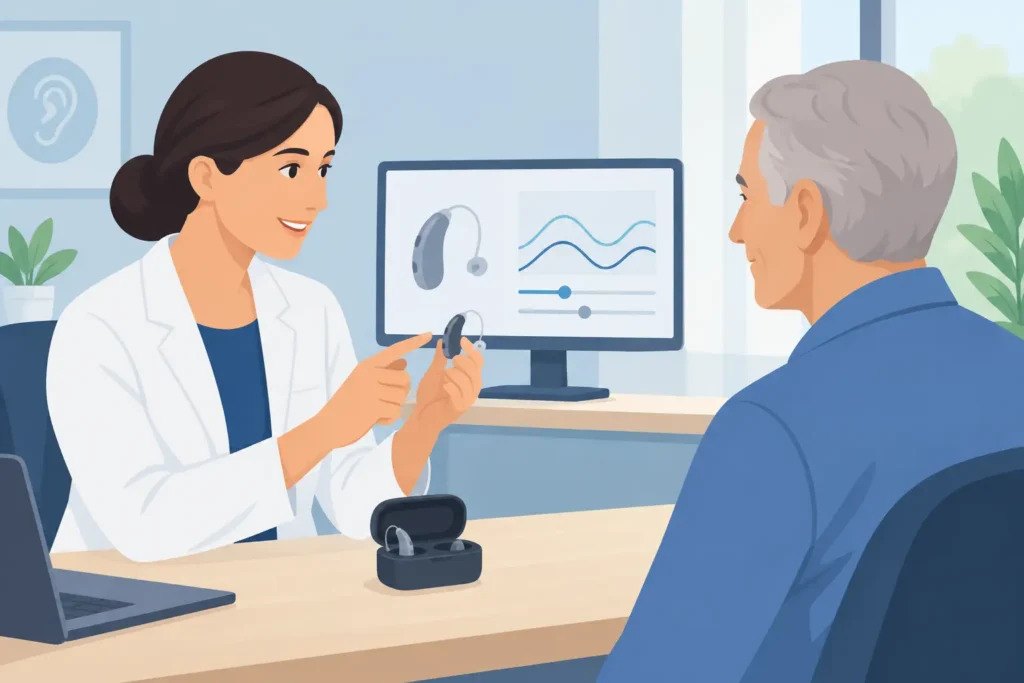
The first days with new hearing aids can be surprisingly busy for your brain. Familiar sounds may seem sharper, your own voice may feel different, and background activity you have not heard clearly for years can suddenly return. A hearing aid programming follow up gives your audiologist the opportunity to turn those real-life experiences into precise adjustments that support more comfortable, useful hearing.
A hearing aid fitting is not a one-time transaction. It is the beginning of a clinical process that combines your hearing test results, real-ear measurement, the technology selected, and your feedback from daily life. Follow-up appointments help ensure your devices are supporting the conversations, environments, and routines that matter most to you.
Why Hearing Aid Programming Follow Up Matters
Hearing aids are programmed to match your hearing loss and listening needs, but no test booth can fully reproduce your kitchen at breakfast, a family dinner, a place of worship, a restaurant, or a busy workplace. Your first weeks of use provide valuable information about how you are hearing in those settings.
During a follow-up visit, a Doctor of Audiology or registered audiologist can review what is working well and what still feels difficult. Perhaps speech is clear at home but challenging in groups. Maybe dishes sound too sharp, traffic seems distracting, or the hearing aids are comfortable for a few hours but become bothersome later in the day. These details help guide programming changes far more effectively than a general statement such as, “They are not working.”
Follow-up care also helps distinguish between an adjustment that is expected during acclimatization and a concern that needs attention. The brain often needs time to relearn how to prioritize speech and filter ordinary environmental sounds. Still, you should not have to simply tolerate settings that are consistently uncomfortable or that interfere with communication.
What Happens at a Follow-Up Appointment
Your appointment should begin with a conversation. Your audiologist may ask where you have worn your hearing aids, how long you wear them each day, which situations have improved, and when you remove them or turn down the volume. Honest feedback is useful, including feedback that feels minor. A small annoyance can point to a setting that deserves refinement.
The visit may also include an inspection of the devices, ear canals, receivers, domes or earmolds, microphones, and wax filters. Earwax, moisture, a blocked filter, or an improper physical fit can affect sound quality. Before changing programming, it is helpful to confirm that the devices themselves and your ears are functioning as expected.
Reviewing Sound Quality and Comfort
Programming adjustments are individualized. Depending on your experience, your audiologist may adjust overall loudness, sound balance across pitches, noise management features, directional microphones, or feedback control. The goal is not to make every sound equally loud. It is to provide access to speech and meaningful environmental sound while keeping listening comfortable.
For example, some people initially need a more gradual level of amplification while they adapt. Others are ready for fuller access to high-frequency sounds that support speech clarity. Neither approach is universally right. The appropriate setting depends on your hearing test, tolerance for sound, communication goals, and consistent daily use.
If you use hearing aids with app controls or multiple listening programs, the appointment is also a good time to review those tools. Many people benefit from a simple setup and rarely need multiple programs. Others regularly move between quiet conversations, meetings, restaurants, and outdoor activities and may benefit from clearer control options. Your audiologist can help keep the technology practical rather than overwhelming.
Confirming the Fit With Real-Ear Measurement
Real-ear measurement is an important part of evidence-based hearing aid care. This test measures the sound delivered by your hearing aids inside your ear canal and compares it with prescribed targets based on your hearing loss. It accounts for the individual shape and acoustics of your ear, which cannot be reliably predicted from software settings alone.
At a follow-up appointment, real-ear measurement may be repeated or reviewed after meaningful programming changes. It helps verify that soft sounds are audible, average speech is comfortable and clear, and louder sounds remain within an appropriate range. Your personal report remains essential, but verification provides an objective clinical check that the hearing aids are doing what they were fitted to do.
How to Prepare for Your Hearing Aid Programming Follow Up
You do not need technical vocabulary to have a productive appointment. A few specific observations will give your audiologist a clear starting point. For several days before the visit, notice the environments where communication is easy and where it remains difficult.
It can help to write down the time and place of a challenging situation, who you were trying to hear, and what happened. For instance, “I hear my spouse in the living room but miss words when the television is on,” gives more useful direction than “I cannot hear at home.” If one hearing aid feels different from the other, mention that as well.
Bring your hearing aids, charger or batteries, phone if you use a companion app, and any accessories you use for television or remote microphones. If a family member regularly communicates with you or has noticed changes in your hearing, their perspective can also be valuable. They may identify improvement that you have not recognized yet, or describe a situation that still needs support.
Try to wear the hearing aids consistently before the appointment unless they cause pain, significant dizziness, or severe discomfort. Consistent use helps your brain adapt and provides a more accurate picture of whether the programming is appropriate. If you have stopped wearing them, do not feel embarrassed. Tell your audiologist why. The reason may be physical fit, sound quality, handling difficulty, or an expectation that needs clarification.
When to Contact Your Audiologist Sooner
Most early concerns can wait for a scheduled follow-up, especially if sounds simply seem unfamiliar or somewhat louder than expected. However, some situations deserve earlier attention. Contact your hearing care provider if you experience pain, soreness that does not settle, persistent whistling, a sudden major change in sound from one device, charging problems, or a hearing aid that is not working.
Sudden changes in hearing, new one-sided hearing loss, severe dizziness, drainage from the ear, or significant ear pain should be assessed promptly by an appropriate healthcare professional. Hearing aid programming is valuable, but it should not be used to explain away new medical symptoms.
Follow-Up Care Is Ongoing, Not a Final Step
Your hearing needs can change over time. Hearing levels may shift, earwax can affect performance, and your lifestyle may look different than it did when you were first fitted. A move to a noisier work environment, a new caregiving role, more social activities, or changes in dexterity can all influence the kind of support you need from your devices.
Routine follow-up appointments allow your audiologist to monitor hearing, clean and inspect equipment, review maintenance, and make programming adjustments when clinically appropriate. They also create space for questions that often arise only after you have lived with hearing aids for a while, such as how to manage them when traveling, what to do if they get wet, or whether a new phone is compatible.
At Golden Hearing & Balance Center, hearing aid care is guided by diagnostic findings, real-world listening goals, and ongoing clinical support. The aim is not simply to make sounds louder. It is to help you participate more comfortably and confidently in the conversations and moments you value.
If something about your hearing aids does not feel right, bring that experience to your follow-up appointment. A thoughtful adjustment today can make tomorrow’s conversation easier to follow.