
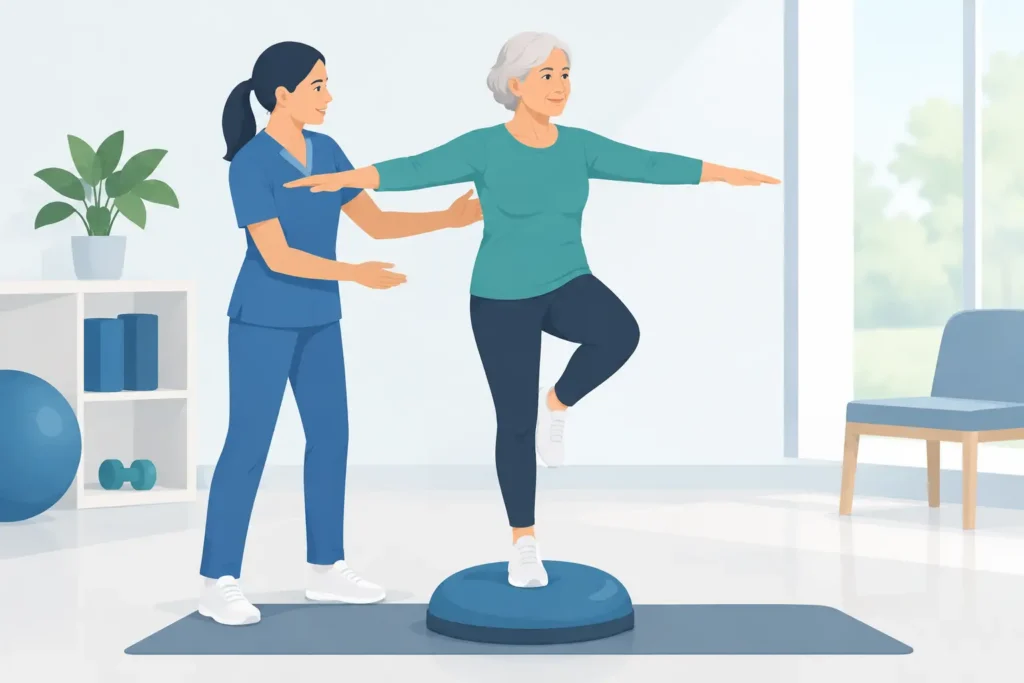
A missed curb, a turn that feels unexpectedly unsteady, or needing to reach for furniture when walking through the house can be early signs that deserve attention. A balance assessment for fall prevention helps identify why a person may feel off balance and whether hearing, inner-ear function, vision, strength, medication effects, or other factors may be contributing. The goal is not simply to label someone as a fall risk. It is to understand the specific reasons behind the concern and recommend appropriate next steps.
Falls are not an inevitable part of aging. While the risk of falling can increase over time, many contributing factors can be assessed and addressed. For adults in Woodbridge, Vaughan, York Region, and the Greater Toronto Area, a thorough evaluation can offer clarity after a fall, during persistent dizziness, or when confidence with walking has begun to change.
Why balance changes deserve a closer look
Balance is a coordinated process, not a single ability. Your brain continuously combines information from your inner ears, eyes, muscles, joints, and nervous system to keep you upright while standing, walking, turning, or moving across uneven ground. A problem in any one of these areas can make everyday movement less secure.
Sometimes the change is obvious. A person may experience spinning vertigo, veering to one side, or repeated stumbles. In other cases, the signs are quieter: avoiding stairs, walking more slowly in dim light, hesitating when turning the head, or feeling unsteady in busy stores. Family members may notice that a loved one has started holding onto counters or no longer feels comfortable walking alone outdoors.
A single fall should not automatically be attributed to balance problems. Tripping over an object, slipping on ice, or wearing unstable footwear can happen to anyone. However, a fall without a clear explanation, recurrent falls, dizziness, or a growing fear of falling warrants a clinical conversation.
What a balance assessment for fall prevention can show
A balance assessment is designed to look beyond the symptom itself. Feeling unsteady does not always mean there is an inner-ear disorder, and dizziness does not always explain a fall. A careful assessment helps distinguish among possible causes and determines whether vestibular testing, medical follow-up, physical therapy, hearing care, or a combination of services may be appropriate.
At Golden Hearing & Balance Center, an evaluation is led by a Doctor of Audiology and begins with listening carefully to the patient’s experience. Details matter. The clinician may ask when symptoms began, whether they occur with head movement or position changes, whether there has been hearing change or ringing in the ears, and whether a fall involved loss of consciousness, weakness, or chest symptoms.
Medical history is also important. Certain medications, blood pressure changes, diabetes, migraine, vision concerns, neuropathy, arthritis, and previous head injuries can affect steadiness. The assessment is individualized because two people with the same complaint may need very different care pathways.
Evaluating inner-ear and vestibular function
The vestibular system in the inner ear detects head movement and helps stabilize vision while you move. When this system is not functioning properly, a person may experience vertigo, motion sensitivity, blurred vision during walking, or imbalance in darkness.
Depending on symptoms and clinical findings, vestibular testing may be used to examine how well the inner-ear balance organs and related reflexes are working. This testing can help identify patterns consistent with certain vestibular conditions and can also show when the inner ear may not be the primary source of imbalance.
Hearing testing may be included when hearing loss, ear pressure, tinnitus, or one-sided symptoms are present. Hearing and balance systems are closely connected within the inner ear, so changes in one area can provide useful context for the other.
Looking at functional balance and movement
A fall-prevention evaluation may also consider how safely someone performs practical movements. This can include observing standing balance, walking, turning, stepping, and moving from sitting to standing. These tasks reveal information that a person may not notice in daily life, such as difficulty maintaining stability when the head turns or reliance on visual cues to stay balanced.
The clinician may discuss footwear, mobility aids, home layout, activity level, and the situations in which falls or near-falls occur. A person who is only unsteady on stairs may need a different recommendation than someone who feels unstable when getting out of bed or walking in low light.
What to expect during the appointment
A balance assessment is not something patients need to prepare for alone. Before testing, patients receive clear instructions about what the visit may involve and whether any medication, food, or activity adjustments are recommended. Requirements vary by test, so it is best not to stop prescription medication unless instructed by the clinician or prescribing provider.
The appointment generally includes a detailed discussion of symptoms and health history, followed by selected hearing, vestibular, or balance measures. Not every patient needs every test. Testing should be guided by the person’s symptoms, medical background, and safety needs rather than a one-size-fits-all checklist.
Some vestibular procedures can briefly reproduce dizziness or motion sensations. This is often useful clinical information, but the testing team should explain what is happening, monitor the patient closely, and allow time to recover between portions of the evaluation. Patients who use a cane, walker, or other mobility device should bring it to the appointment.
Results should be explained in plain language. A patient should leave with an understanding of what the findings suggest, what remains uncertain, and which next step is appropriate. In some cases, that may include referral to a physician, vestibular rehabilitation therapist, or another health professional.
How assessment findings guide fall prevention
The most helpful fall-prevention plan is specific. General advice to “be careful” rarely gives someone the confidence or direction they need. Recommendations depend on the underlying factors identified during assessment.
For example, a person with positional vertigo may benefit from a targeted repositioning treatment provided by an appropriately trained clinician. Someone with vestibular weakness may be referred for vestibular rehabilitation, where a physical therapist uses individualized exercises to improve gaze stability, walking confidence, and balance strategies. If hearing loss is affecting awareness of environmental sounds or communication during activity, a hearing evaluation and appropriate treatment may be part of the broader plan.
When medication effects, fainting episodes, sudden neurologic symptoms, or cardiovascular concerns are suspected, prompt medical assessment is essential. Audiology and vestibular care are valuable parts of a coordinated approach, but they do not replace medical evaluation for symptoms outside their scope.
Home safety can also matter. Improving lighting, securing loose rugs, adding stair railings, keeping commonly used items within easy reach, and using appropriate footwear may reduce avoidable hazards. These changes are especially useful when combined with treatment for the clinical cause of imbalance rather than used as the only response.
When to seek urgent care
Some symptoms require immediate medical attention rather than a routine balance appointment. Seek urgent care for sudden weakness or numbness on one side of the body, facial drooping, difficulty speaking, new severe headache, chest pain, fainting, sudden vision loss, or a sudden inability to walk safely. Sudden hearing loss should also be assessed promptly.
For persistent dizziness, repeated falls, new unsteadiness, or vertigo that interferes with work, driving, walking, or daily activities, scheduling a clinical evaluation is a sensible next step. Bringing a family member or caregiver can be helpful, especially if they have observed changes that the patient may not have recognized.
Confidence is a meaningful outcome
Fear of falling can quietly reduce independence. People may stop attending social events, avoid exercise, or limit errands because they no longer trust their balance. Unfortunately, becoming less active can lead to further weakness and less confidence over time.
A careful assessment offers more than test results. It gives patients and families a clearer picture of what may be affecting stability and where to focus next. If walking, turning, or getting up no longer feels as steady as it once did, an individualized evaluation can be a practical first step toward moving through daily life with greater confidence.