Many people are surprised to learn that vestibular migraine dizziness can completely disrupt your balance without causing a typical headache. While we often associate migraines solely with throbbing head pain, they are actually complex neurological events that can target your inner ear and balance pathways instead of your pain receptors.
If you frequently experience episodes of spinning, light sensitivity, or sudden unsteadiness—even if you rarely get a traditional headache—you might be experiencing this exact condition.
What Exactly is a Vestibular Migraine?
A vestibular migraine is a distinct neurological condition where the primary, most disruptive symptoms affect your balance, equilibrium, and spatial awareness. The word vestibular refers directly to your inner ear anatomy and the complex neural pathways in the brainstem that process movement, telling you exactly where your body is in space.
As illustrated in the anatomical diagram above, the inner ear houses specialized structures like the semicircular canals, which fluidly detect rotation, and microscopic structures containing tiny crystals called oliths that track gravity and linear motion. These delicate structures rely on hair cells to send continuous electrical signals along sensory nerve fibers directly to the brain.
During an episode of vestibular migraine dizziness, the neural pathways interacting with this highly responsive system misfire. Your brain gets highly distorted information, creating a vivid, distressing illusion of movement when you are completely still.
Surprisingly, up to 50% of these episodes occur without any noticeable headache pain at all. Because a throbbing head is missing from the equation, many patients spend months or even years bouncing between different medical specialists before receiving an accurate diagnosis.
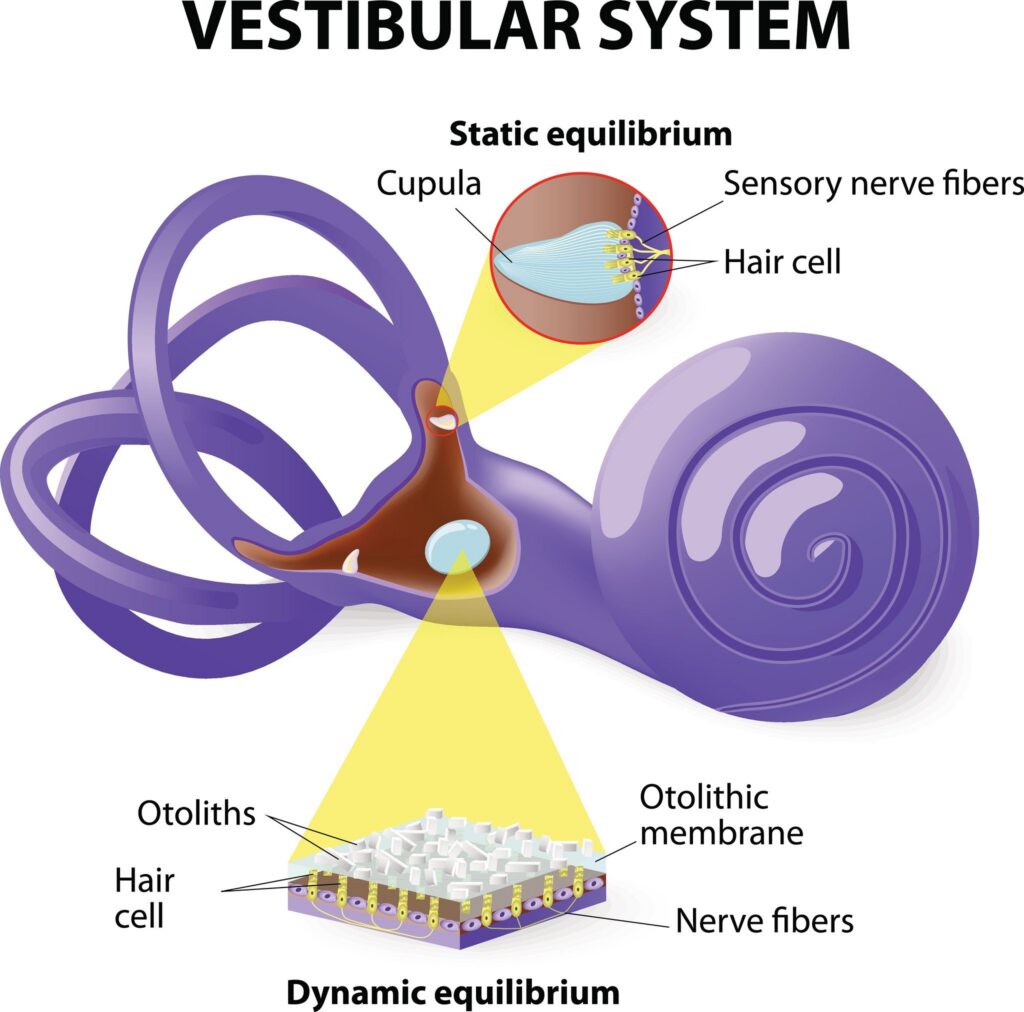
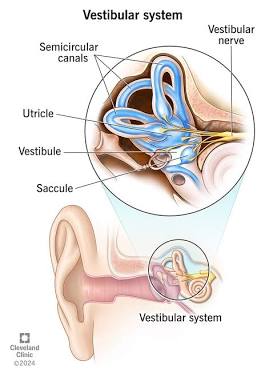
The Inner Ear Balance Network: This complex pathway coordinates your balance and can misfire during an episode.. Source: Cleveland Clinic
The Core Symptoms: What Does it Feel Like?
The sensations associated with vestibular migraine dizziness are highly variable. An episode can strike suddenly and last for just a few minutes, or it can linger as a vague, persistent unsteadiness for several consecutive days. Patients going through an episode frequently describe several distinct sensations:
- Spontaneous Vertigo: A sudden, overwhelming feeling that you or the entire room around you is spinning, tilting, or tumbling.
- Motion Sensitivity: Feeling deeply dizzy, disoriented, or profoundly nauseous when you move your head quickly, look at moving objects, or try to navigate busy, visually crowded environments like grocery store aisles or heavy traffic.
- Internal Unsteadiness: A persistent loss of physical balance or an unsettling “rocking” sensation, making you feel as though you are trying to walk on the deck of a boat in rough seas.
- Sensory and Visual Hypersensitivity: Finding that bright fluorescent lights, computer screens, loud noises, or high-contrast geometric patterns instantly aggravate your dizziness.
- Secondary Ear Symptoms: Experiencing a distinct feeling of fullness, pressure, or muffled hearing in one or both ears, often accompanied by temporary fluctuations in tinnitus (ringing or buzzing sounds in the ears).
Common Triggers: What Sets Off an Episode?
Much like traditional, pain-dominant migraines, vestibular migraines are highly sensitive to specific internal and environmental changes. These factors don’t directly cause the underlying neurological condition, but they act as a spark that sets off an episode. Common triggers include:
| Trigger Category | Specific Examples & Culprits |
| Sleep & Fatigue | Chronic sleep deprivation, irregular sleep schedules, or a sudden drop in stress levels (often causing “weekend migraines”). |
| Dietary Factors | Aged cheeses, dark chocolate, red wine, artificial sweeteners, monosodium glutamate (MSG), or sudden changes in caffeine intake. |
| Environmental Changes | Rapid barometric pressure shifts, flickering fluorescent lights, or looking at high-refresh-rate digital screens. |
| Hormonal Fluctuations | Shifts related directly to the menstrual cycle, pregnancy, oral contraceptives, or menopause. |
| Dehydration & Blood Sugar | Skipping meals or failing to drink enough fluids throughout a busy workday. |
Getting the Right Answers: Why Specialized Testing Matters
Because dizziness is a broad symptom, it can stem from many different places. It could be caused by localized inner ear mechanical issues like BPPV (Benign Paroxysmal Positional Vertigo)—where tiny ear crystals shift out of place—or conditions like Meniere’s disease.
Because the treatments for these conditions are completely different, guessing is never an option. Getting an accurate diagnosis requires an objective, in-depth evaluation of your entire balance pathway.
At Golden Hearing & Balance Center, we look beyond general symptoms by utilizing advanced, clinical-grade diagnostic instrumentation. By precisely measuring how your eyes, brainstem, and inner ear structures communicate and work together, we can confidently differentiate between localized ear disorders and neurological balance issues like vestibular migraine dizziness.
Once we pinpoint the exact root cause of your symptoms, we can establish a highly personalized, targeted management plan. This comprehensive approach frequently combines identifying and managing your specific dietary or lifestyle triggers, structural pacing, and specialized Vestibular Rehabilitation Therapy (VRT)—a customized exercise program designed to retrain your brain to correctly process balance signals again.
Ready to Find Relief and Regain Your Balance?
If unpredictable episodes of spinning, vertigo, or persistent vestibular migraine dizziness are disrupting your daily life, your career, or your peace of mind, you don’t have to manage it alone.
Contact Golden Hearing & Balance Center today to book a comprehensive vestibular and equilibrium assessment. Let’s identify the true source of your dizziness and get you back on steady ground.