
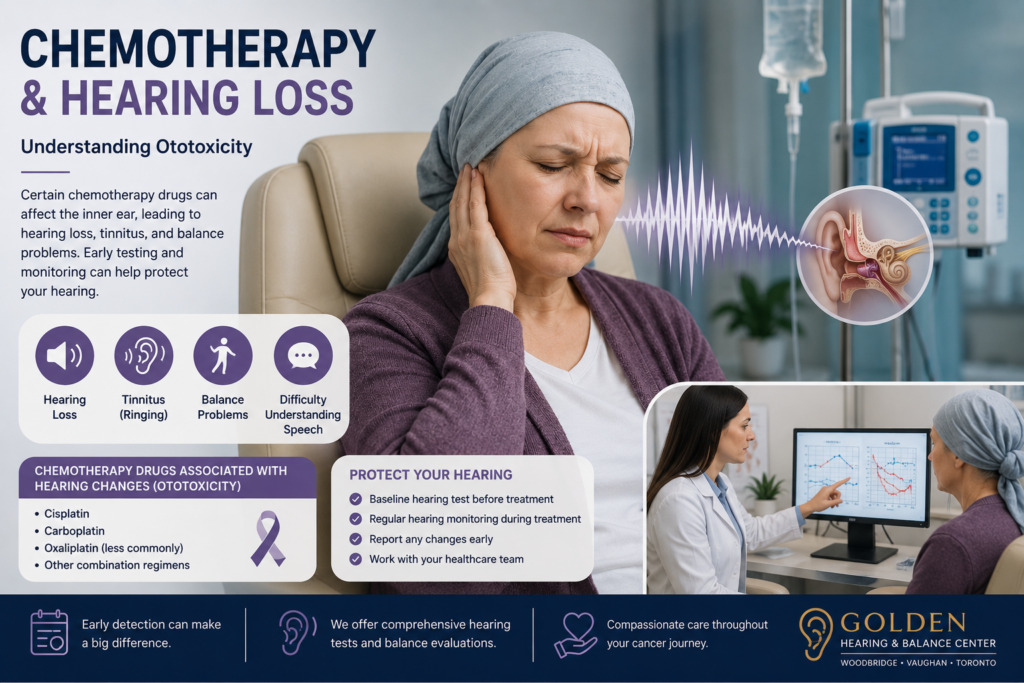
Chemotherapy hearing loss is a potential side effect of certain cancer treatments that can affect hearing, balance, and quality of life. While chemotherapy plays a critical role in treating cancer, some medications may damage the delicate structures of the inner ear, leading to hearing loss, tinnitus, or dizziness.
Many patients are unaware that hearing changes can occur during or after treatment. Understanding the signs of ototoxicity and seeking early hearing monitoring can help identify problems before they significantly impact communication and daily activities.
Cancer treatment can save lives, but some chemotherapy medications may have side effects that affect hearing and balance. This condition is known as ototoxicity, which literally means “ear poisoning.”
What Is Ototoxicity?
Ototoxicity occurs when medications damage the sensitive structures of the inner ear, including the cochlea (hearing organ) and vestibular system (balance organs).
Certain chemotherapy medications can affect the tiny hair cells responsible for hearing. Once damaged, these cells do not regenerate, which means hearing changes may be permanent in some cases.
Which Chemotherapy Drugs Can Affect Hearing?
Several chemotherapy medications have been associated with hearing loss, particularly:
- Cisplatin
- Carboplatin
- Oxaliplatin (less commonly)
- Certain combination chemotherapy regimens
The risk may increase with:
- Higher cumulative doses
- Existing hearing loss
- Kidney disease
- Previous noise exposure
- Radiation involving the head and neck
- Simultaneous use of other ototoxic medications
Symptoms of Chemotherapy-Related Hearing Loss
Patients may experience:
Hearing Loss
Hearing loss often begins in the high frequencies, making it difficult to hear:
- Children’s voices
- Birds chirping
- Certain speech sounds such as “s,” “f,” and “th”
Tinnitus
Many patients report:
- Ringing in the ears
- Buzzing sounds
- Hissing noises
- Pulsing or humming sensations
Difficulty Understanding Speech
Even when sounds seem loud enough, speech clarity may become reduced, especially in noisy environments.
Balance Problems
Some chemotherapy drugs can affect the vestibular system and may cause:
- Dizziness
- Unsteadiness
- Motion sensitivity
- Increased risk of falls
Why Hearing Monitoring Is Important During Chemotherapy
One of the best ways to protect hearing is through regular audiological monitoring.
A baseline hearing assessment before treatment allows healthcare providers to compare future hearing tests and detect changes as early as possible.
Early detection may allow the oncology team to:
- Monitor treatment effects
- Consider medication adjustments when appropriate
- Provide hearing rehabilitation recommendations
- Address communication difficulties sooner
What Tests Are Recommended?
A comprehensive hearing assessment may include:
Pure Tone Audiometry
Measures hearing sensitivity across multiple frequencies.
High-Frequency Audiometry
This specialized test can identify early changes before they affect everyday communication.
Speech Testing
Evaluates the ability to understand speech.
Otoacoustic Emissions (OAEs)
Assesses the function of the cochlear hair cells and may detect subtle inner ear changes.
Tinnitus Evaluation
Helpful for patients experiencing ringing or buzzing in the ears.
Can Chemotherapy Hearing Loss Be Treated?
Treatment depends on the severity and nature of the hearing changes.
Hearing Aids
Modern hearing aids can significantly improve communication and quality of life for individuals experiencing hearing loss after chemotherapy.
Tinnitus Management
Evidence-based tinnitus management strategies may help reduce the impact of ringing or buzzing sounds.
Communication Strategies
Patients may benefit from practical techniques to improve communication in daily life.
Vestibular Rehabilitation Therapy (VRT)
For patients experiencing dizziness or balance difficulties, vestibular rehabilitation may help improve stability and reduce symptoms.
When Should You Seek an Audiological Assessment?
Schedule a hearing evaluation if you:
- Are preparing to start chemotherapy
- Have completed chemotherapy treatment
- Notice hearing changes during treatment
- Experience tinnitus
- Develop dizziness or balance problems
- Have difficulty understanding speech
Early assessment can help identify hearing changes before they significantly affect daily life.
Hearing and Balance Care During Cancer Treatment
At Golden Hearing & Balance Center, we provide comprehensive hearing and balance assessments for individuals undergoing or recovering from chemotherapy treatment.
Services may include:
- Baseline hearing testing
- High-frequency audiometry
- Otoacoustic emissions (OAEs)
- Tinnitus assessment
- Vestibular evaluation
- Hearing aid consultations
Our goal is to help patients maintain the best possible hearing and quality of life throughout their cancer journey.
Book a Hearing Assessment
If you are receiving chemotherapy or have noticed hearing changes after treatment, professional hearing monitoring may help identify concerns early and guide appropriate management.
Golden Hearing & Balance Center
📞 647-847-1991
🌐 www.goldenhearing.ca