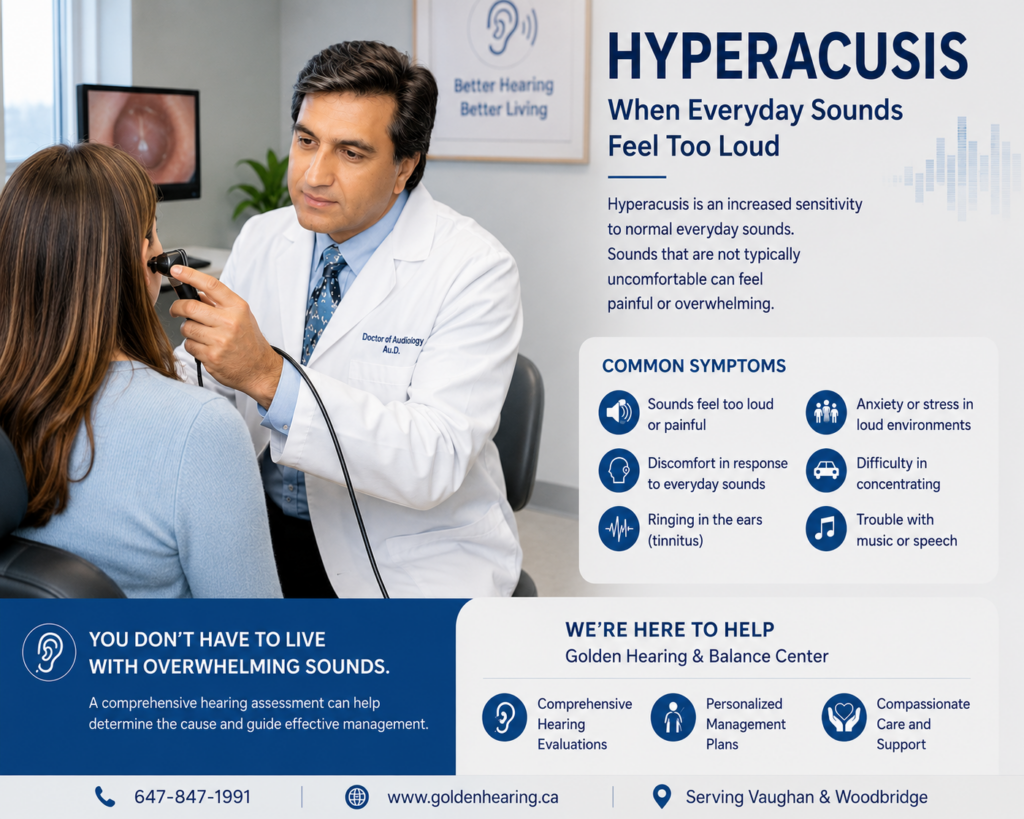
Do common sounds such as running water, dishes clattering, traffic, children playing, or even normal conversations seem unbearably loud or uncomfortable?
If so, you may be experiencing hyperacusis, a condition that causes increased sensitivity to everyday sounds. Unlike normal hearing discomfort from extremely loud noises, hyperacusis can make ordinary environmental sounds feel overwhelming, stressful, or even painful.
For many individuals, hyperacusis can significantly affect quality of life, leading to anxiety, social withdrawal, difficulty concentrating, and avoidance of everyday activities.
What Is Hyperacusis?
Hyperacusis is a hearing disorder characterized by an abnormal intolerance to everyday sounds. Sounds that most people consider comfortable may be perceived as excessively loud, irritating, or painful.
People with hyperacusis often report:
- Discomfort from everyday sounds
- Ear pain triggered by noise
- Difficulty tolerating busy environments
- Increased stress around sound exposure
- Avoidance of restaurants, shopping malls, and social gatherings
- Reduced quality of life
Hyperacusis can occur in individuals with normal hearing as well as those with hearing loss.
Common Symptoms of Hyperacusis
Symptoms vary from person to person but may include:
Sound Sensitivity
Normal environmental sounds may seem much louder than they actually are.
Ear Pain
Some individuals experience discomfort or pain when exposed to sounds that others find acceptable.
Emotional Distress
Persistent sound sensitivity can lead to anxiety, frustration, irritability, and fatigue.
Social Avoidance
Many people begin avoiding noisy environments, social events, restaurants, and workplaces.
Difficulty Concentrating
Background sounds may become distracting and overwhelming.
What Causes Hyperacusis?
Several conditions may contribute to hyperacusis, including:
Noise Exposure
Exposure to loud concerts, machinery, firearms, or prolonged loud music can affect the auditory system.
Head Injury or Concussion
Traumatic brain injuries and concussions may alter how the brain processes sound.
Migraine Disorders
Many individuals with vestibular migraine or chronic migraine experience increased sound sensitivity.
Hearing Loss
Some people develop hyperacusis alongside hearing loss or tinnitus.
Ear Disorders
Certain inner ear conditions may contribute to abnormal sound perception.
Stress and Anxiety
Psychological stress can worsen the perception of sound sensitivity.
Hyperacusis vs. Loudness Recruitment
Although they may seem similar, hyperacusis and loudness recruitment are different conditions.
Hyperacusis
- Can occur with normal hearing
- Many everyday sounds are uncomfortable
- Often related to abnormal sound processing in the auditory system
- Frequently associated with migraine, concussion, tinnitus, or anxiety
Loudness Recruitment
- Usually associated with sensorineural hearing loss
- Sounds suddenly become loud after reaching a certain volume
- Caused by damage to inner ear hair cells
An accurate diagnosis is important because treatment approaches differ.
How Is Hyperacusis Diagnosed?
At Golden Hearing & Balance Center, a comprehensive assessment may include:
Hearing Evaluation
A complete hearing test helps determine whether hearing loss is contributing to symptoms.
Loudness Discomfort Testing
We measure the volume levels at which sounds become uncomfortable.
Tinnitus Assessment
Since hyperacusis often occurs alongside tinnitus, a tinnitus evaluation may also be recommended.
Medical History Review
Understanding factors such as concussion history, migraine, noise exposure, and stress helps guide treatment planning.
Can Hyperacusis Be Treated?
While there is no single cure for hyperacusis, many individuals experience significant improvement with appropriate management.
Sound Therapy
Gradual exposure to carefully controlled sounds can help the auditory system become less sensitive over time.
Tinnitus Management
When tinnitus and hyperacusis occur together, treatment strategies often address both conditions simultaneously.
Hearing Protection Education
Excessive use of earplugs may actually worsen sound sensitivity. Proper guidance is important to avoid overprotection.
Stress Management
Stress and anxiety can amplify sound sensitivity. Relaxation techniques and counseling may be beneficial.
Vestibular and Neurological Assessment
For patients with dizziness, concussion history, or vestibular migraine, additional evaluation may help identify contributing factors.
Living with Hyperacusis
Many individuals with hyperacusis feel isolated because others cannot understand their symptoms. However, sound sensitivity is a real and recognized condition.
With proper assessment and individualized treatment, many patients can return to enjoying social activities, work environments, and daily life with greater comfort and confidence.
When Should You Seek Help?
Consider scheduling an evaluation if:
- Everyday sounds feel painfully loud
- You avoid social situations because of noise
- You experience tinnitus and sound sensitivity
- You have a history of concussion or migraine
- Noise causes significant stress or anxiety
Early assessment can help identify contributing factors and develop an effective management plan.
Hyperacusis Assessment in Vaughan and Woodbridge
At Golden Hearing & Balance Center, we provide comprehensive hearing, tinnitus, and balance assessments for individuals experiencing sound sensitivity, tinnitus, hearing loss, dizziness, and vestibular disorders.
Our goal is to help patients understand their symptoms and develop personalized treatment strategies to improve quality of life.
Book an Appointment Today
If everyday sounds have become uncomfortable or overwhelming, professional evaluation may help identify the cause and available treatment options.
Golden Hearing & Balance Center
📞 647-847-1991
🌐 www.goldenhearing.ca